
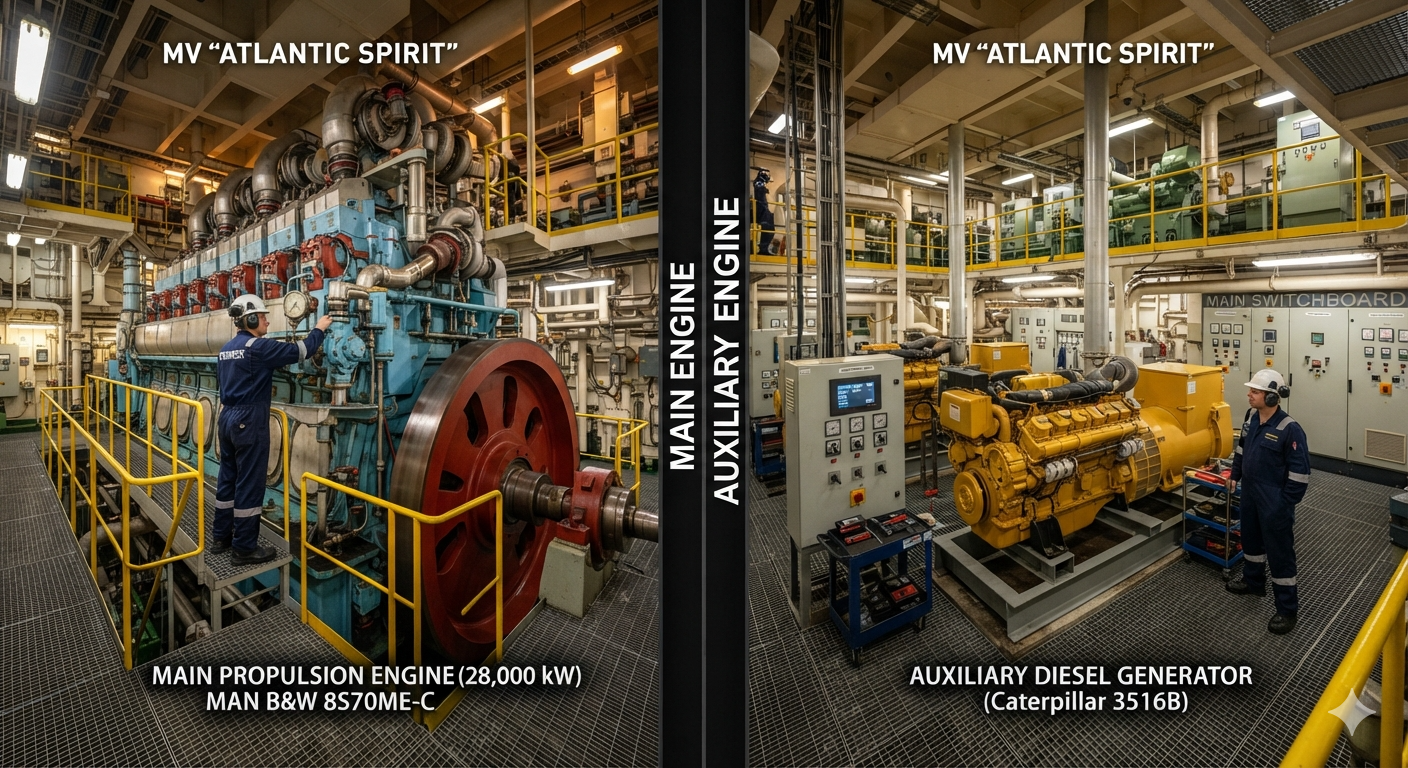
Main Engine vs Auxiliary Engine: Understanding the Difference
Introduction to Engine Types
Engines are pivotal in numerous applications across various industries, playing essential roles in functionality and efficiency. Understanding the differences between a main engine and an auxiliary engine is crucial for grasping their specific applications and contributions to overall systems. The main engine is predominantly regarded as the primary source of propulsion in vessels and heavy machinery. It provides the necessary power to drive the main functions, such as pushing a ship through water or powering substantial industrial equipment.
In maritime contexts, the main engine is typically large and robust, designed to operate continuously under demanding conditions, ensuring that the vessel maintains its course and speed. This engine type often operates on specialized fuels, such as heavy fuel oil or marine diesel, depending on the operational requirements and regulations.
In contrast, auxiliary engines serve supplementary roles in both maritime and industrial applications. They are designed to support various systems that enhance operational efficiency and comfort, rather than providing direct propulsion. For instance, in a ship, auxiliary engines might power electrical generators, hydraulic systems, and onboard equipment, such as refrigeration and lighting systems. Similarly, in industrial settings, these engines might be responsible for operating smaller machines or providing backup power during peak demand situations.
Overall, while the main engine is central to driving the primary movement and functionality, auxiliary engines are vital for supporting additional operations and enhancing system reliability. This distinction is fundamental in selecting appropriate engine types for specific applications, ensuring optimal performance, and maintaining operational integrity across various scenarios.
Functions of Main Engines
Main engines serve as the primary power source for various modes of transport, including vehicles and large vessels. Their foremost function is to generate the substantial thrust necessary to propel these vessels over land or through water. Specifically designed for efficiency and performance, main engines utilize advanced engineering principles to convert fuel into mechanical energy, enabling them to achieve high levels of power output. To accomplish this, they can operate on a variety of fuels such as diesel, gasoline, and alternative energy sources, depending on the application.
The operation of a main engine is fundamentally linked to its design and technology. Each component, from the combustion chamber to the turbocharger, works in a synergistic manner to enhance performance. For instance, in maritime applications, main engines are typically large, high-efficiency units that can operate continuously over long periods, requiring robust materials and sophisticated cooling systems to maintain operational integrity under rigorous conditions.
Moreover, maintenance plays a crucial role in the performance of main engines. Regular inspections and scheduled overhauls are essential to ensure they operate at optimal efficiency and to minimize downtime. Issues such as fuel quality, lubrication, and component wear can significantly affect the performance of a main engine. To combat these challenges, advanced diagnostics and predictive maintenance technologies are increasingly being integrated into engine management systems, providing real-time data and analytics.
The importance of main engines in transportation cannot be overstated, as they not only influence the speed and efficiency of travel but also have broader implications for fuel consumption and emissions. Understanding the functions of main engines is vital for stakeholders in the automotive and maritime industries, ensuring that they can make informed decisions regarding engine selection, maintenance practices, and efficiency improvements.
Functions of Auxiliary Engines
Auxiliary engines play a pivotal role in various applications across multiple industries, serving essential functions that supplement the capabilities of the main engine. Their primary purpose is to provide power for secondary systems that are critical to the overall operation of machinery and vessels. For instance, in maritime applications, auxiliary engines generate electrical power to operate navigation systems, lighting, and other onboard equipment, ensuring that these systems function smoothly when the main engine is not running or is under maintenance.
There are several types of auxiliary engines, each designed for specific applications. Diesel engines are commonly used due to their efficiency and reliability, while gas turbine engines are favored in scenarios requiring high power output in a compact form. Moreover, reciprocating engines are widespread in scenarios where moderate power and operational flexibility are needed. The choice of auxiliary engine type depends significantly on the operational requirements and operational environment.
The importance of auxiliary engines cannot be overstated, particularly when it comes to enhancing safety and operational efficiency. In the shipping industry, auxiliary engines serve as backup power sources, ensuring that critical systems remain operational even if the main engine fails. This redundancy is vital for maintaining safety standards and avoiding hazardous situations. Additionally, auxiliary engines contribute to the overall operational efficiency by enabling the main engine to focus on propulsion, while the auxiliary engine takes on additional loads. This specialization leads to optimized fuel consumption and reduced wear on the main engine, ultimately prolonging its lifespan and improving maintenance costs.
In conclusion, auxiliary engines serve a crucial role in supporting main engines across various industries, offering power for secondary systems while enhancing safety and operational efficiency. Understanding the functions of these engines is essential for professionals working in fields that depend heavily on reliable machinery.
Comparative Analysis: Main vs Auxiliary Engines
In understanding the differences between main engines and auxiliary engines, it is essential to consider several critical factors, including efficiency, power output, operational costs, and environmental implications. The main engine serves as the primary source of propulsion in vessels, often designed for maximum output and efficiency during primary operations. In contrast, the auxiliary engine operates concurrently, usually providing power for auxiliary functions such as electricity generation, heating, or water desalinization.
When it comes to efficiency, main engines are typically optimized for sustained high performance under full load conditions. They are engineered to deliver peak power while maintaining fuel efficiency during propulsion. Auxiliary engines, however, are usually not meant to operate at full capacity for extended periods, which can lead to a different approach to fuel consumption and operational efficiency. Despite this, both types of engines have seen advancements that improve efficiency metrics.
Power output is another vital differentiator. Main engines possess a significantly higher power output, which is necessary for moving larger vessels. Auxiliary engines, while lower in power, are designed to handle varying loads since they are often used for non-propulsion purposes. This distinction impacts how each engine contributes to the overall performance of the vessel or system in terms of load handling and energy distribution.
Operational costs are also a major consideration. Main engines often require a substantial upfront investment and entail higher maintenance expenses due to their complex nature. Auxiliary engines, typically less complex and cheaper to maintain, provide a cost-effective solution for additional power needs. As fuel prices fluctuate, the operational costs tied to both engines can influence overall system economics.
Lastly, the environmental considerations surrounding main and auxiliary engines are increasingly relevant. Regulatory frameworks are evolving to impose stricter emissions standards, which in turn impacts the design and operational modalities of both engine types. Advancements in technology, particularly in emissions reduction and alternative fuels, are making strides in enhancing the sustainability of both main and auxiliary engines.
As technology progresses, the lines between main and auxiliary engines are expected to blur, with innovations aimed at boosting efficiency, reducing costs, and minimizing environmental impact. The future could witness hybrid systems where the functionalities of both engine types are combined for better operational flexibility and eco-friendliness.