
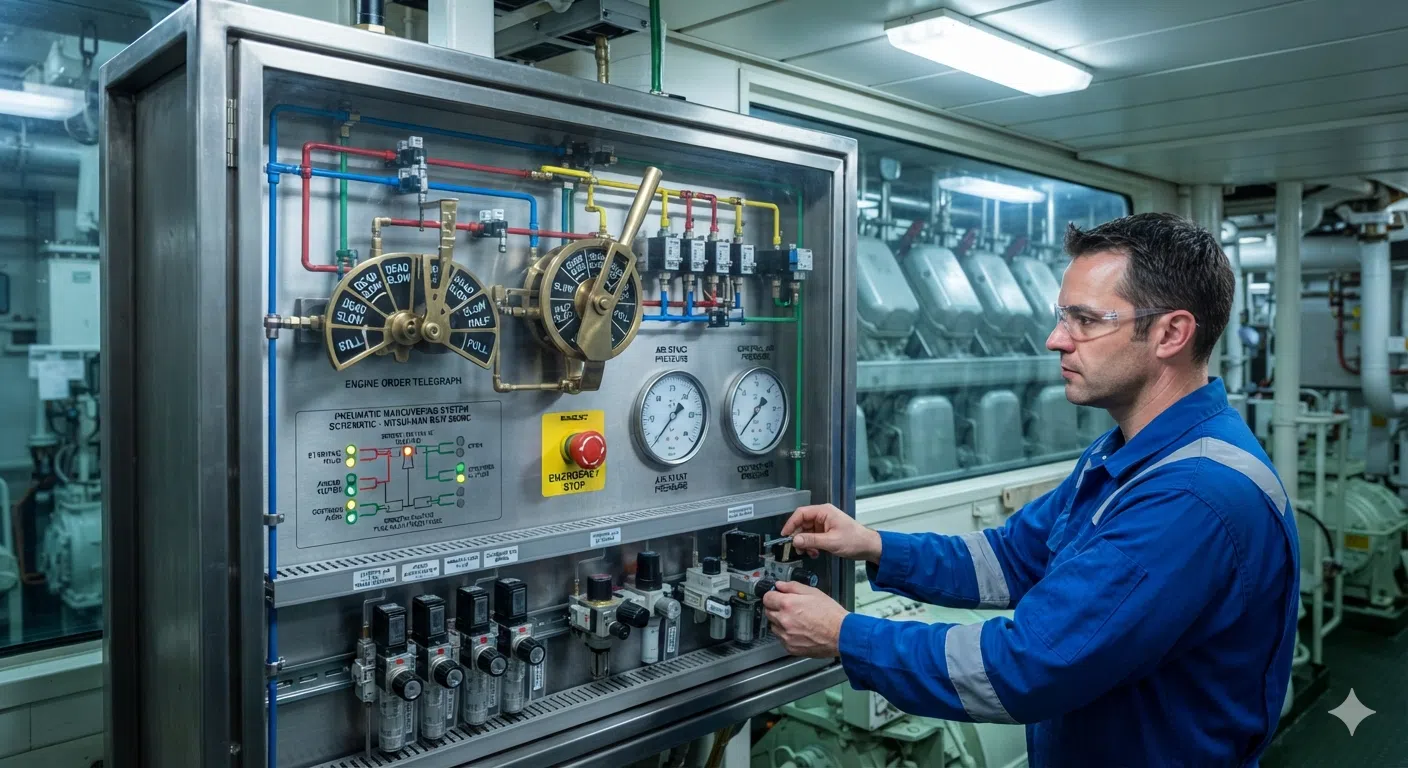
Marine Pneumatic Maneuvering System: Complete Working Guide
Introduction to Marine Pneumatic Maneuvering Systems
The marine pneumatic maneuvering system represents a crucial evolution in the field of maritime operations, playing a significant role in enhancing the maneuverability and control of various marine vessels. Utilizing the principles of pressure and compressed air, these systems allow for precise adjustments in a ship’s movement, thereby contributing to operational efficiency and safety.
Pneumatic systems are built upon the fundamental principle of converting compressed air into mechanical motion. In the context of marine applications, this manifests as the activation of various components such as rudders, thrusters, and stabilizers. The ability to harness pneumatic power enables vessels to execute complex maneuvers with greater ease and responsiveness than traditional mechanical systems, thus minimizing the risk of accidents and improving overall operational efficacy.
Marine pneumatic maneuvering systems are employed across a diverse range of maritime activities, from commercial shipping to fishing and naval operations. In commercial shipping, for instance, these systems significantly reduce the time required for vessels to dock or change direction, which is vital for maintaining efficient logistical operations. Similarly, in fishing, precise maneuvering allows for better positioning of vessels relative to targeted aquatic areas, ultimately leading to more successful catches.
In naval operations, the agility afforded by pneumatic systems is indispensable, as military vessels often require quick and decisive manoeuvre capabilities in high-stakes environments. By integrating pneumatic technology into their designs, naval ships enhance their tactical advantages, ensuring optimal performance in dynamic conditions.
Key Components of a Pneumatic Maneuvering System
A marine pneumatic maneuvering system comprises several critical components that work in unison to ensure efficient operation. The primary elements include air compressors, pneumatic cylinders, valves, and control systems. Each component plays a pivotal role in providing maneuvering capabilities essential for vessel navigation and operation.
The air compressor serves as the heart of the pneumatic maneuvering system. It generates the compressed air required to power other elements, delivering the necessary pressure that drives the pneumatic cylinders. These cylinders are vital for converting the compressed air energy into mechanical motion, enabling precise movements of the vessel’s thrusters or rudders.
Valves are equally important, functioning as regulators that control the flow of compressed air to the pneumatic cylinders. They ensure that the right amount of air is delivered at the correct time, facilitating smooth and efficient maneuvers. Various types of valves, such as solenoid valves and spool valves, can be utilized to fine-tune the control over the system.
The control system, often incorporating sensors and automated mechanisms, orchestrates the operation of other components. It interprets information regarding the vessel’s position and desired movement, sending signals to the valves and actuators. This coordination is integral for achieving responsive and accurate handling of the marine vessel.
Material choices for these components are crucial, especially considering the harsh marine environment. Corrosion-resistant materials, such as stainless steel and specialized polymers, are often selected to ensure the longevity and reliability of the pneumatic maneuvering system. Additionally, design considerations must account for the challenges posed by saltwater exposure and varying pressure conditions, emphasizing the importance of robust engineering practices.
Working Principles of Marine Pneumatic Systems
Marine pneumatic maneuvering systems operate on fundamental principles of physics that revolve around the behavior of compressed air. At the core of these systems is the generation of compressed air, which serves as the main driving force. Compressors are utilized to create high-pressure air, which is then stored in tanks. The integrity of these storage tanks is crucial, as any leaks or structural weaknesses can lead to inefficiencies and potential safety hazards.
Once the compressed air is generated, it must be precisely regulated to ensure effective maneuvering. This is achieved through various control valves that manage both the pressure and flow rate of the air directed to different parts of the vessel, such as thrusters or stabilizers. The manipulation of air pressure leads to changes in force generation, allowing operators to execute specific maneuvers such as turning, stopping, or accelerating.
The behavior of compressed air in these systems is also greatly influenced by flow rates. High flow rates can result in rapid response times, which is essential for immediate adjustments during navigation. However, it is equally important to balance this with system stability to prevent erratic movements. Pneumatic systems must be finely tuned to prevent pressure fluctuations that can compromise maneuverability.
Successful implementation of marine pneumatic maneuvering systems can be illustrated through various case studies. For instance, certain container ships have adopted these systems to improve their docking procedures, employing rapid directional changes facilitated by advanced pneumatic controls. As a result, such vessels have demonstrated enhanced maneuverability and overall performance in crowded ports.
Maintenance and Troubleshooting of Pneumatic Systems
The proper maintenance and troubleshooting of marine pneumatic maneuvering systems are crucial for ensuring operational safety and efficiency. Regular inspections should be conducted to identify any wear and tear on components such as valves, actuators, and compressors. A comprehensive inspection protocol should include checking for signs of leaks, ensuring that seals and fittings are secure, and verifying that pneumatic lines are free of obstructions.
Preventive maintenance is essential to extend the lifespan of these systems and to minimize costly repairs. It is recommended to create a maintenance schedule that includes routine tasks such as lubricating moving parts, replacing worn components, and calibrating system pressure. Additionally, maintaining clean filters and ensuring that the pneumatic system is free from contaminants can significantly improve its performance and reliability.
Common issues encountered in pneumatic systems typically include air leaks, pressure losses, and malfunctioning control valves. Air leaks can often be detected through a visual inspection or by listening for hissing sounds. If a leak is found, it is advisable to depressurize the system before attempting to repair it, checking gaskets and connections first. Pressure loss may result from blocked filters or damaged lines, which need to be promptly addressed to ensure the system operates at optimal efficiency.
Furthermore, malfunctioning control valves can significantly impact the performance of marine pneumatic maneuvering systems. Diagnosing valve issues may involve checking the actuator signals and ensuring electrical connections are intact. If necessary, valves should be repaired or replaced based on their condition.
In conclusion, the maintenance and troubleshooting of pneumatic systems require a proactive approach, with emphasis on routine inspections and preventive measures to avoid serious operational failures. Neglecting these practices can lead to detrimental consequences, emphasizing the importance of a systematic maintenance strategy.